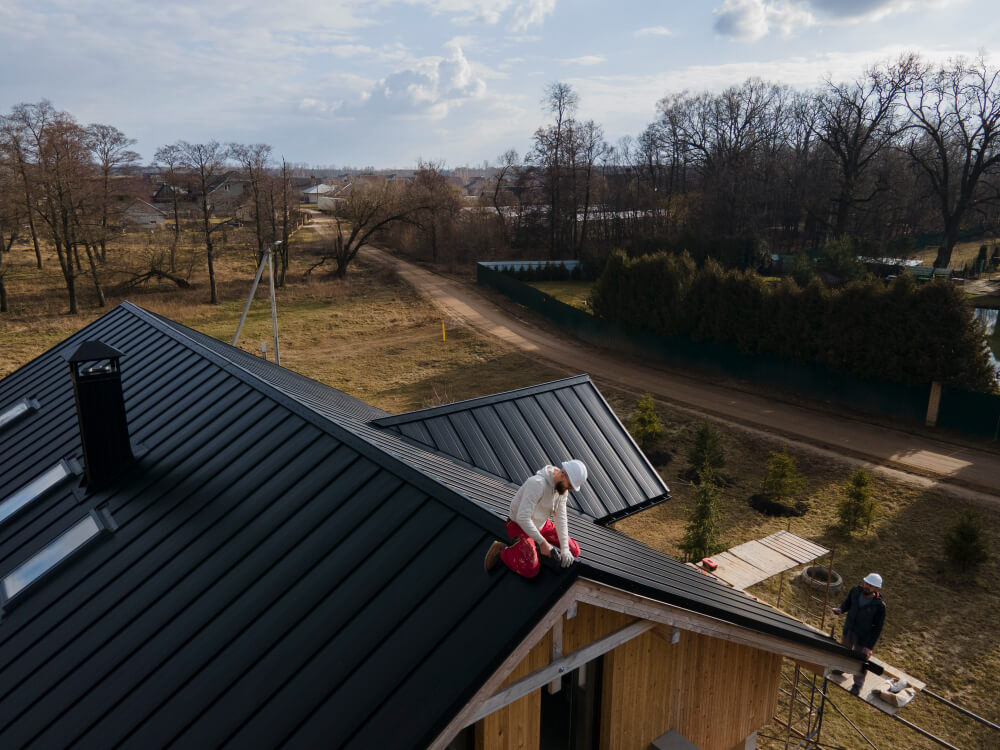
Listed river-frontage townhouse. The firm's understanding of historic fabric and willingness to liaise with the conservation officer made a genuinely complex job manageable. Every detail of the lead valleys and parapet cappings was done with care.
Chelsea's experienced roofers — Kings Road terraces, Cheyne Walk riverside properties, mansion blocks & mews cottages. Free quotes, 10-year guarantee.
Chelsea's history is considerably older than the terraces we mostly work on. The Saxon manor of Cealchyð — "landing place for chalk" — appears in ninth-century records, and by the early sixteenth century Henry VIII had built Chelsea Manor on the riverbank near what is now Cheyne Walk, drawn by the clean air and good fishing. Sir Thomas More was a Chelsea resident in the 1520s; the area's reputation as a retreat for writers, artists and intellectuals has never really left it.
The residential Chelsea that exists today is largely a product of the 1820s to 1870s. The Cadogan Estate, which still owns and manages a significant portion of the area, developed the stucco terraces around Sloane Square, Cadogan Square and Sloane Street during the early and mid-Victorian period. The riverfront — Cheyne Walk, Cheyne Row, Tite Street — was developed slightly earlier, attracting the Pre-Raphaelites and the Aesthetic Movement (Dante Gabriel Rossetti lived at 16 Cheyne Walk; James McNeill Whistler had his studio on Tite Street). The King's Road shopping frontage came later, with its 1960s and 1970s boutique period making it temporarily the most famous street in London.
What we work with today is therefore a mix of early-to-mid-Victorian stucco (Thames-frontage and Cadogan Estate), later Victorian red brick (further north, towards South Kensington), purpose-built Edwardian mansion blocks (Chelsea Cloisters, Whitelands House), and a peppering of twentieth-century additions including the distinctive 1970s World's End Estate. The Chelsea Conservation Area covers almost the whole residential area.
Chelsea contains an unusually high proportion of river-frontage listed properties — Cheyne Walk, Cheyne Row and Tite Street are designated for their cultural as well as architectural significance. These are typically brick-fronted Georgian or early-Victorian townhouses with pitched slate roofs concealed behind parapets, complex lead-lined box gutters, and substantial original chimney stacks. The Cadogan Estate stucco terraces — around Cadogan Square, Lennox Gardens, Pont Street — are taller (four to six storeys), with mansard slate roofs and elaborate lead detailing. King's Road and its side streets carry mixed retail/residential stock with flat and pitched roofs of varying quality. World's End Estate and smaller 1970s blocks have predominantly flat roofs in felt or asphalt systems, many now at end of life.
A general roofer from outside Chelsea can, in theory, do the work. In practice, roofing decisions in Chelsea are constantly shaped by local factors that an outsider doesn't know: which streets are in conservation areas, which properties are listed, which managing agents handle which blocks, which local scaffolders will or won't take on narrow-street jobs, which conservation officer handles which zone of the borough, which materials merchants actually stock what they claim to.
We've been working in this patch for thirty years. That institutional knowledge — dozens of small pieces of information that we don't even think about any more — is what lets us quote realistic timescales, realistic prices, and deliver to those estimates. It's also why our warranty-work rate is so low: when you know a street, you know what the roof is likely to be hiding before you get up there.
Practically, that means fewer surprises, quicker turnarounds, and more straightforward conservation approvals. Every Chelsea client gets the same attention regardless of job size.
We serve every street in the SW3, SW10 postcode area. Emergency callouts typically arrive within 60–90 minutes.
A small sample of feedback from recent jobs in the area.
Listed river-frontage townhouse. The firm's understanding of historic fabric and willingness to liaise with the conservation officer made a genuinely complex job manageable. Every detail of the lead valleys and parapet cappings was done with care.
Full mansard re-slating on our mansion flat (top-floor, own the roof outright). Reclaimed Welsh slate, new Code 5 lead gutters, dry-fix ridge system. The finish is spectacular and the 10-year guarantee is reassuring.
Emergency call-out after tiles slipped in a January gale. On site in just over an hour, tarped properly, full repair booked for the following week. No panic, no inflated pricing, just quiet competence.
Flat roof above our flat had been leaking for three years — managing agent kept patching it. Finally organised a full replacement via KR. EPDM rubber, 20-year warranty, and no more leaks. Excellent value for the job.
1. The phone call or email. You ring us on 0330 223 7665 or drop a line to info@kensingtonroofers.co.uk. We'll ask a handful of diagnostic questions — property type, roof age if known, specific issues, whether you've had other quotes — and book a site visit.
2. The site visit. A senior tradesman attends at a time that suits you, typically within 3–5 working days. We'll go up on the roof if safe (often via a loft hatch and ladder, sometimes needing a tower), photograph everything, and discuss options with you on the spot.
3. The written quote. You'll receive a detailed written quote within a further 3–5 working days. It itemises materials by brand and spec, scaffold by duration, labour by day rate and crew size, and waste removal by skip. You can compare it line-by-line against other quotes.
4. Acceptance and scheduling. If you accept, we agree a start date. For smaller repairs, typically 1–2 weeks out; for re-roofs, 3–6 weeks depending on scaffold and material lead times. Deposit schedules are clear and capped.
5. The work. Scaffold goes up on day one, strip and work proceeds through the following days, and scaffold comes down on the last day. You get a daily update from the site foreman; end-of-day tidying and overnight weather protection are standard.
6. Handover. Final walk-around with you, guarantee certificate, manufacturer warranties, photographic record of the finished work, and waste transfer notes. Final invoice issued after your sign-off.
Questions specific to working in Chelsea. For general questions see our main FAQ page.
We're an approved contractor for a number of Cadogan Estate properties where the freeholder manages roof works directly. Individual leaseholders can also commission us for internal or flat-specific work. The estate has specific detailing requirements — we know what they are and quote accordingly.
Yes — we've done multiple jobs on Cheyne Walk, Cheyne Row and Tite Street. These properties have specific conservation requirements (reclaimed materials, lime mortars, hand-cast lead) and need Thames Water consent for any drainage changes affecting the embankment. We manage all of this.
Many Chelsea streets are narrow and busy. We use lightweight alloy towers where possible for smaller jobs, and arrange scaffold permits with RBKC for larger work. On Cheyne Walk we coordinate with Transport for London (it's a TLRN red route) for any scaffold affecting carriageway.
Chelsea mews cottages are typically small, two-storey brick properties with low-pitched roofs. Common work includes small slate replacements, dormer-junction flashings, and re-covering rear flat-roof extensions. We've done lots of mews work and know the access routes.
Yes. Commercial roof work on King's Road is usually done out-of-hours or weekends to avoid disrupting trading. We can arrange early-morning or Sunday working if needed, and our team is used to the security and access constraints of retail environments.
We cover all of SW3, SW10 with free site visits, written quotes and 24/7 emergency callouts.
0330 223 7665